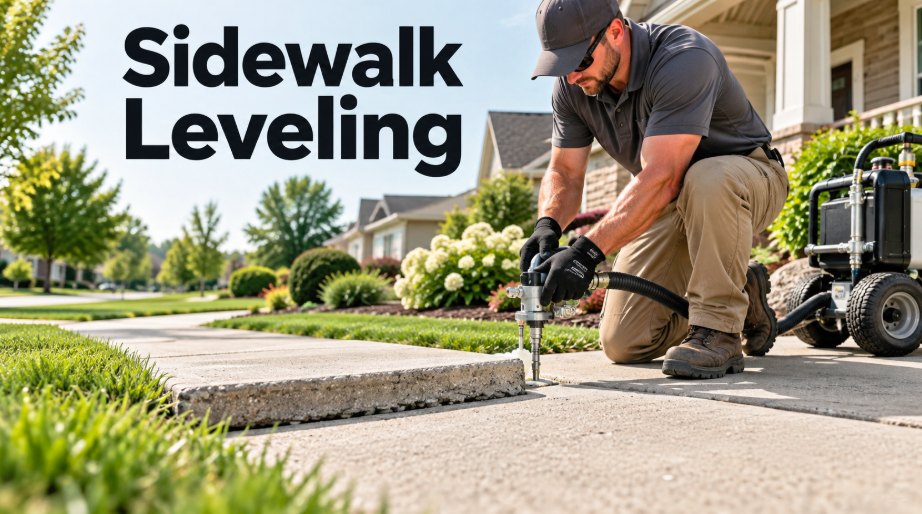
Sidewalk leveling focuses on correcting settled concrete panels while retaining usable slabs whenever possible. Rather than automatically tearing out an entire walkway, we evaluate whether individual sections can be raised, supported, and brought closer to the surrounding elevation.
What Causes Sidewalk Slabs to Sink?
Sidewalks rest on compacted base material and soil. Over time, changes beneath the concrete can allow panels to move independently.
Typical causes include:
- Erosion beneath the sidewalk
- Poor soil compaction
- Water runoff
- Irrigation oversaturation
- Soil shrinkage
- Underground void formation
- Heavy loads crossing the sidewalk
- Tree root activity
- Broken drainage lines
- Changes around nearby landscaping
Because sidewalks are usually constructed from separate panels, one section may settle while adjacent panels remain relatively stable.
Uneven Sidewalk Hazards
A raised edge between two slabs can interrupt the natural walking path. The difference may seem minor when viewed from a distance but become more obvious when someone walks across it.
Problem areas commonly develop near:
- Driveway crossings
- Front entrances
- Mailboxes
- Gates
- Curbs
- Landscaping
- Parking areas
- Steps
- Public walkways
- Side yards
Leveling can help create smoother transitions between adjoining surfaces.
How Sidewalk Leveling Works
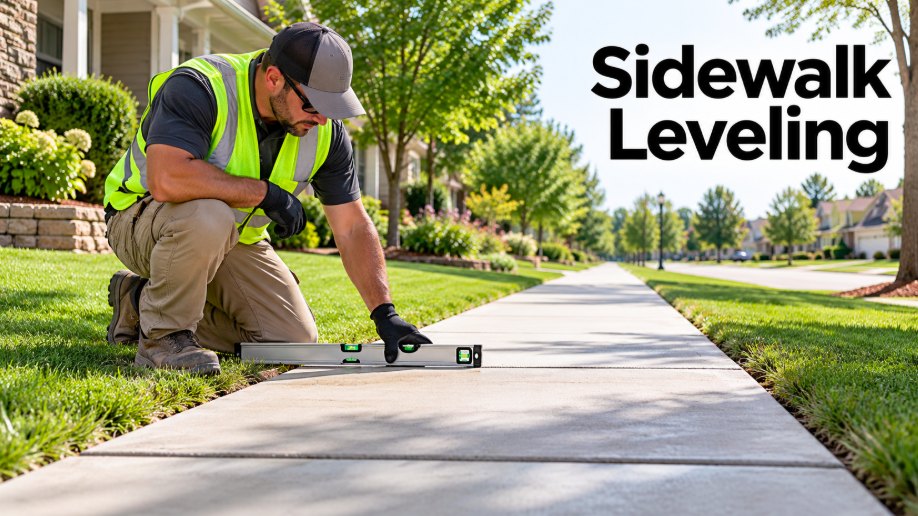
We begin by examining the full walkway instead of concentrating on only one visible edge. Sometimes the apparent high slab is actually at the correct elevation while the neighboring panel has settled.
Determining which section moved is important before making corrections.
When a slab is suitable for lifting, the repair process can introduce material beneath the concrete to support the empty space and gradually adjust the panel’s position. Corrections are made carefully because sidewalks frequently connect with driveways, steps, curbs, porches, and other fixed surfaces.
Trip Edge Reduction
One of the main goals of sidewalk leveling is reducing abrupt changes in elevation between concrete panels.
Grinding may sometimes be used for certain minor raised edges, but it removes concrete from the surface rather than correcting the underlying settlement. Leveling takes a different approach by addressing the elevation of the sunken slab.
The appropriate solution depends on the condition of the concrete and the reason the unevenness developed.
Residential Sidewalk Leveling
Residential walkways may settle anywhere from the street to the backyard.
We can evaluate:
- Front sidewalks
- Side-yard walkways
- Garden paths
- Concrete paths around homes
- Walkways leading to garages
- Entry paths
- Mailbox walkways
- Concrete around apartment properties
- Walkways between buildings
- Paths connecting patios and driveways
Maintaining smooth walking transitions can improve both the appearance and usability of these areas.
Sidewalk Drainage Problems
Sunken sidewalk panels can create depressions where water collects after rain or irrigation. Persistent moisture may then contribute to additional erosion beneath the concrete.
Where the site allows, adjusting the slab elevation may help restore more appropriate surface drainage.
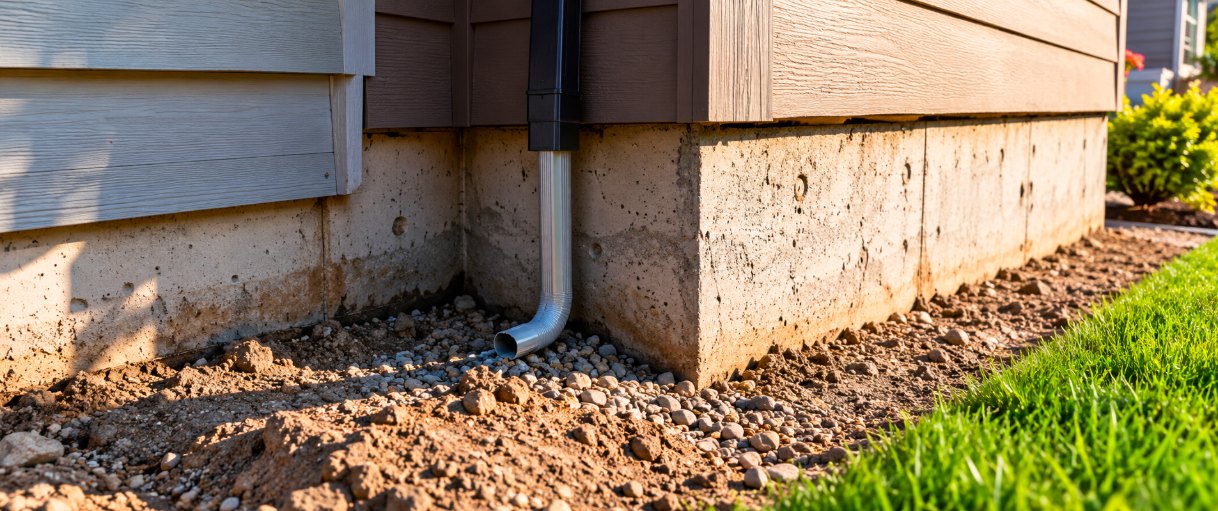
We also look for other contributors such as leaking sprinklers, concentrated roof runoff, poorly positioned downspouts, or landscaping that directs water beneath the walkway.
Tree Roots and Concrete Sidewalks
Tree-related sidewalk problems require special attention. Roots can sometimes raise concrete upward rather than allowing it to sink.
If an adjoining slab has been pushed upward by roots, simply lifting the surrounding slabs may not always be the best solution. We evaluate the movement pattern to determine whether concrete leveling is appropriate.
Tree and root conditions may also need to be addressed separately before long-term concrete repairs are completed.
When Sidewalk Replacement May Be Needed
Not every sidewalk is a candidate for leveling.
Replacement may be more appropriate when panels are badly shattered, extremely deteriorated, displaced by major roots, missing large sections, or unable to remain intact during lifting.
When the concrete itself remains in usable condition, however, preserving the slab may reduce unnecessary removal and reconstruction.
A Practical Approach to Uneven Walkways
Sidewalk leveling is about correcting the surface intelligently rather than replacing concrete simply because its elevation changed.
We inspect each section, consider drainage and surrounding structures, and develop a repair plan designed around the actual condition of the walkway.
If your sidewalk has sinking panels, uneven joints, puddling, or uncomfortable transitions, request an evaluation to determine whether leveling is a practical solution.