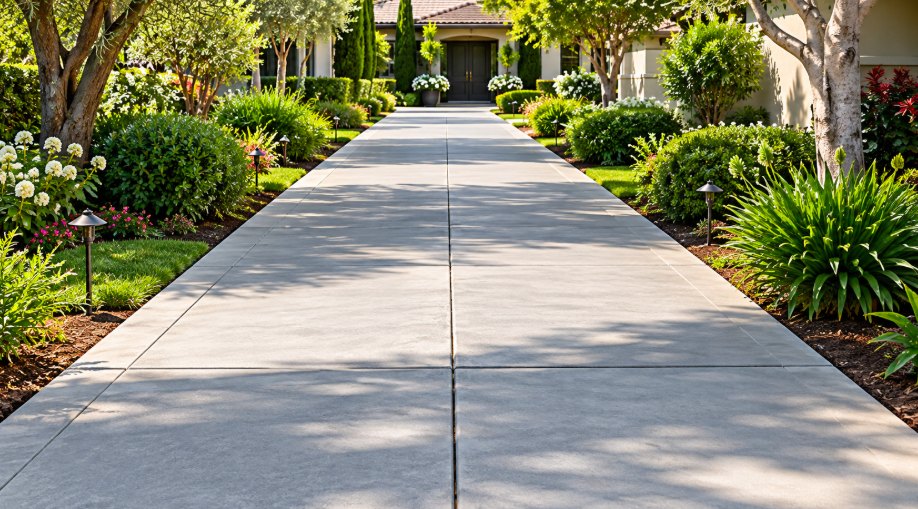

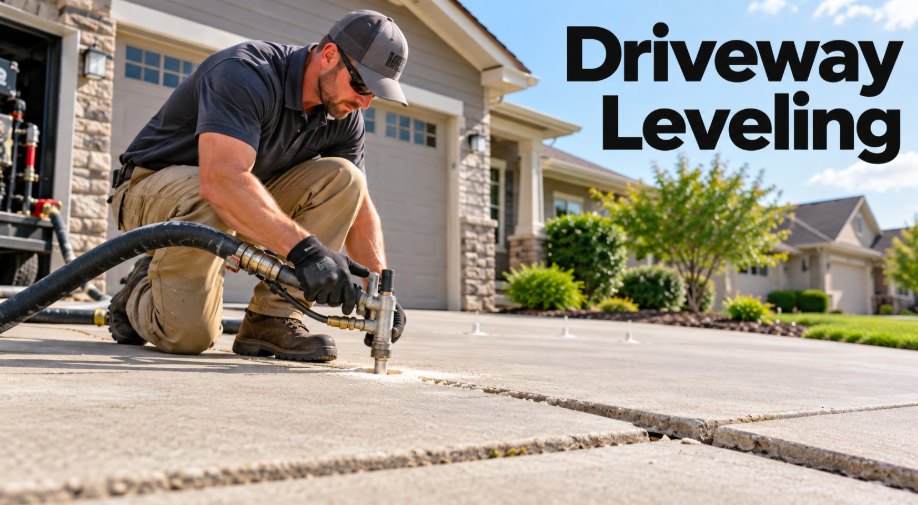
Our driveway leveling service focuses on lifting and stabilizing concrete sections that have moved from their original position. Every project begins with an evaluation of the driveway surface, the pattern of settlement, drainage conditions, cracks, joints, and the surrounding soil. This allows us to determine which sections may be suitable for leveling and which areas may require a different repair method.
Why Concrete Driveways Become Uneven
Concrete is strong, but the soil supporting it can change over time. Settlement often develops beneath the slab rather than within the concrete itself.
Common causes include:
- Soil compaction beneath the original driveway
- Soil washout caused by rain or poor drainage
- Water moving underneath concrete slabs
- Expansive soil that changes with moisture
- Underground voids
- Repeated vehicle traffic
- Tree root activity
- Improperly prepared base material
- Plumbing or irrigation leaks
- Erosion along driveway edges
A driveway may remain structurally sound while portions of the slab move downward. When conditions allow, leveling can address the height difference while preserving much of the existing concrete.
Signs Your Driveway May Need Leveling
Settlement usually becomes noticeable gradually. You may see one slab sitting lower than the slab beside it or notice your vehicle dipping as it enters the garage.
Other warning signs include sunken areas, uneven expansion joints, water puddles, raised slab edges, gaps beneath concrete, cracked transitions, and sections that slope toward the house or garage.
Changes should be evaluated before they become larger. Continued water movement beneath a driveway can allow the supporting soil to deteriorate further.
Our Driveway Leveling Process
The first step is identifying the sections that have settled and determining the approximate amount of correction required. We also examine adjoining surfaces so the finished driveway transitions properly to garage floors, sidewalks, curbs, aprons, and walkways.
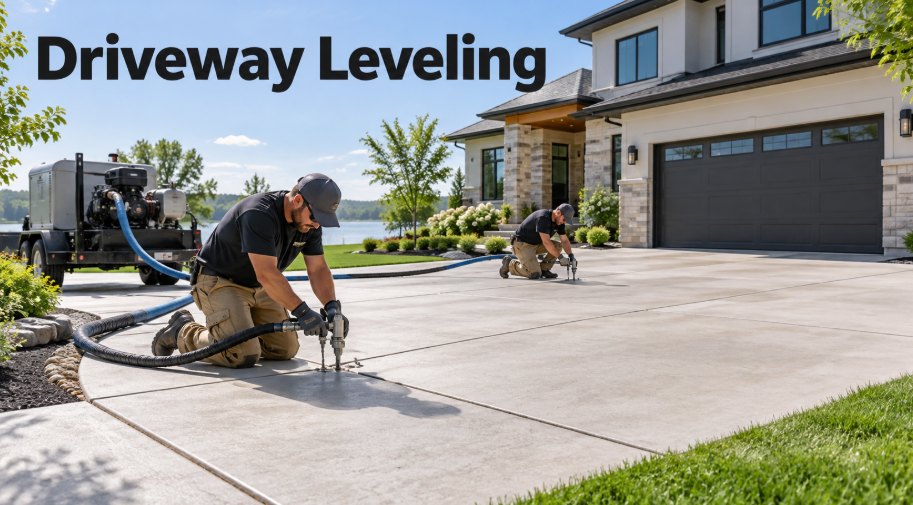
Depending on the property and repair method, lifting material may be introduced beneath the concrete to fill empty spaces and raise the slab. The goal is controlled movement rather than simply forcing the slab upward.
Small adjustments can make a significant difference. The objective is to create practical transitions, improve drainage where possible, and reduce pronounced trip edges while limiting unnecessary disturbance to the surrounding driveway.
Driveway Leveling vs. Driveway Replacement
Replacement may be appropriate when concrete is severely fractured, crumbling, extensively deteriorated, or structurally unsuitable for lifting. However, a driveway with solid slabs that have primarily settled may not require complete demolition.
Leveling can offer several advantages:
- Less demolition
- Reduced material waste
- Shorter project scope
- Preservation of existing concrete
- Less disruption around the garage and yard
- Potentially lower cost than full replacement
Every driveway is different, so we evaluate the condition of the concrete before recommending a repair approach.
Improving Driveway Drainage
Correcting slab elevation may also help address certain drainage issues. A driveway should guide water away from important structures and prevent unnecessary pooling where possible.
During an assessment, we look at the relationship between the driveway, garage, street, landscaping, drains, and neighboring concrete. Leveling alone cannot solve every drainage problem, but adjusting settled sections may improve the way water moves across the surface.
Leveling Driveway Sections Near the Garage
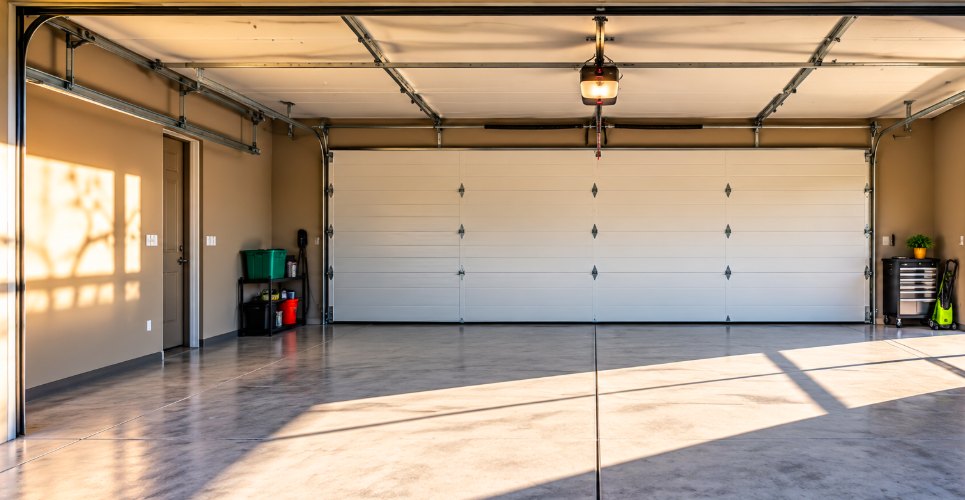
The garage entrance is one of the most noticeable locations for slab settlement. A sunken driveway can create a bump or ledge where vehicles enter the garage.
We evaluate this area carefully because the driveway slab must transition properly to the garage floor. Controlled leveling can reduce a significant height difference while maintaining appropriate movement joints between separate concrete surfaces.
Driveway Leveling for Residential Properties
We service many types of driveway layouts, including:
- Single-car driveways
- Double-width driveways
- Long residential driveways
- Driveway aprons
- Concrete parking pads
- Side driveway extensions
- Driveways connected to walkways
- Driveway sections near gates
- Driveway-to-garage transitions
The repair strategy is adjusted according to the slab dimensions, settlement pattern, traffic use, and site conditions.
Protecting the Repaired Area
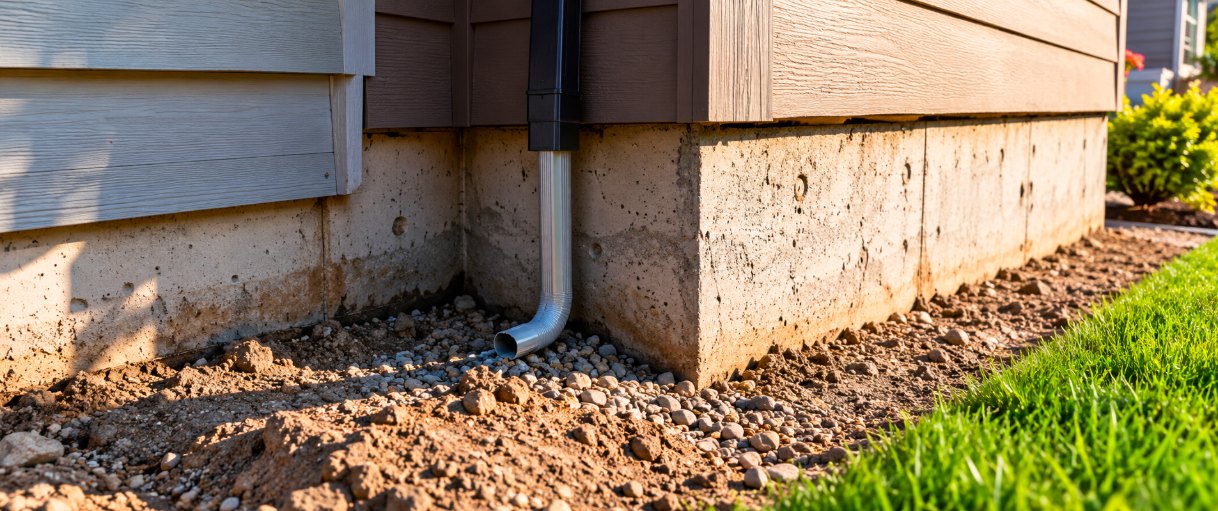
Once leveling is complete, property owners can help reduce future soil movement by managing water around the driveway. Downspouts should discharge away from slab edges, irrigation should not continually saturate the base, and drainage problems should be corrected when discovered.
Cracks and joints may also need appropriate maintenance to limit unnecessary water penetration.
Schedule a Driveway Leveling Evaluation
If your driveway has sunken sections, noticeable height differences, poor transitions, or uneven slabs, leveling may provide an effective alternative to immediate replacement.
We inspect the existing concrete, identify areas of settlement, and explain practical repair options based on the actual condition of your driveway.