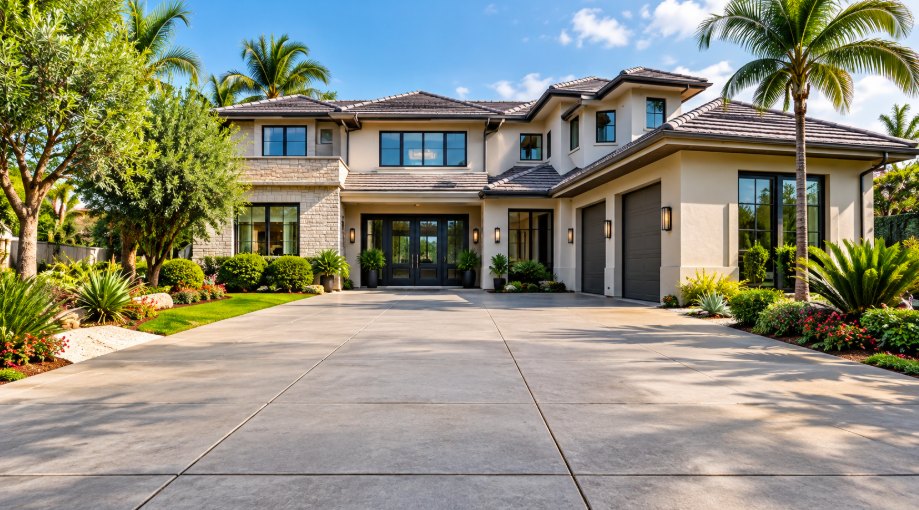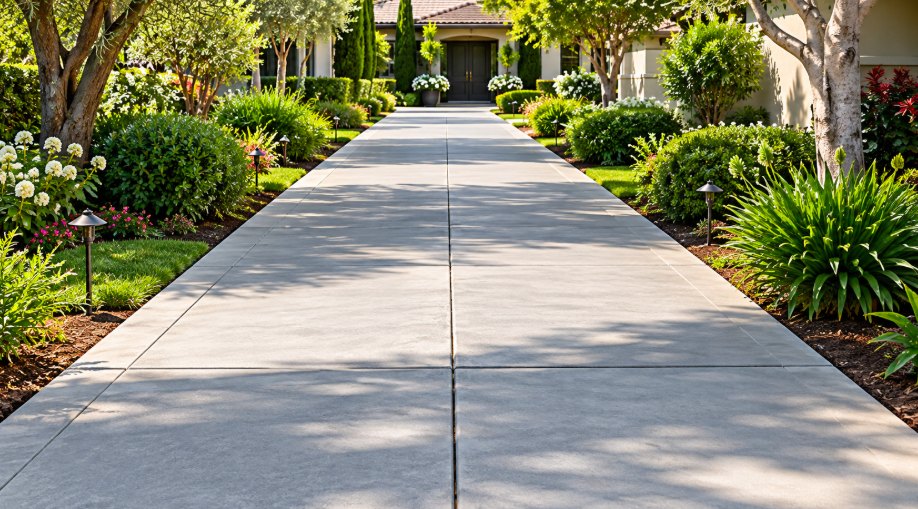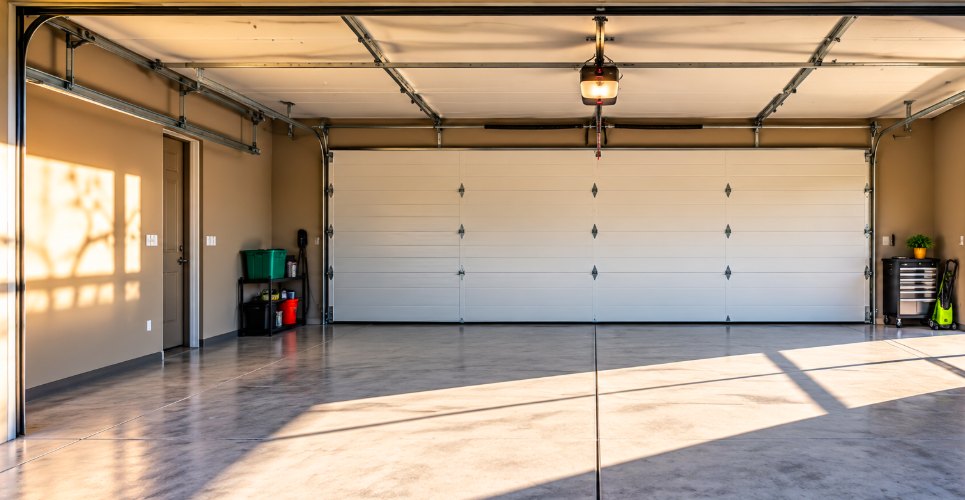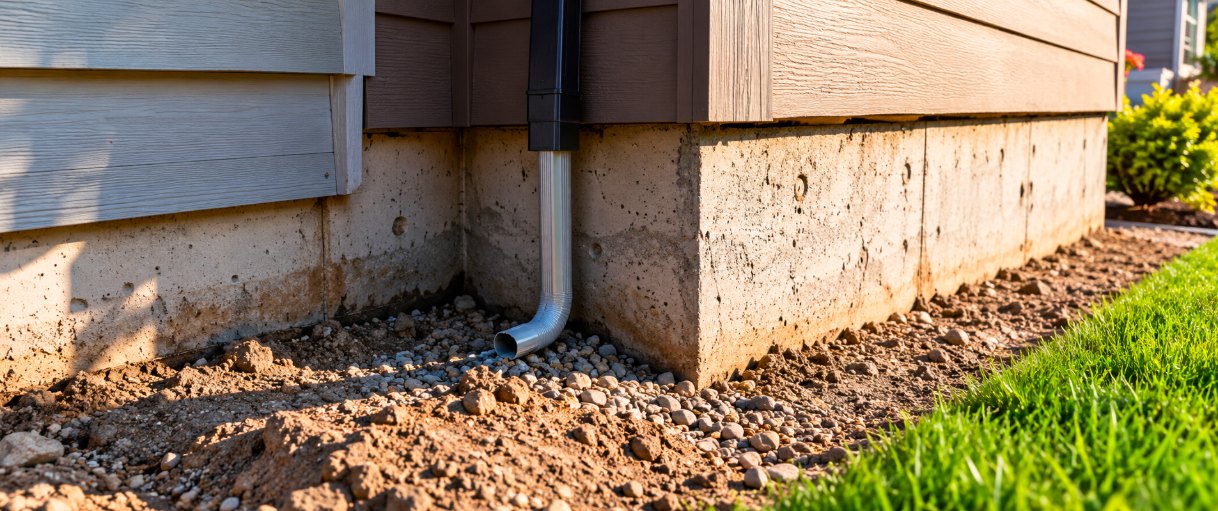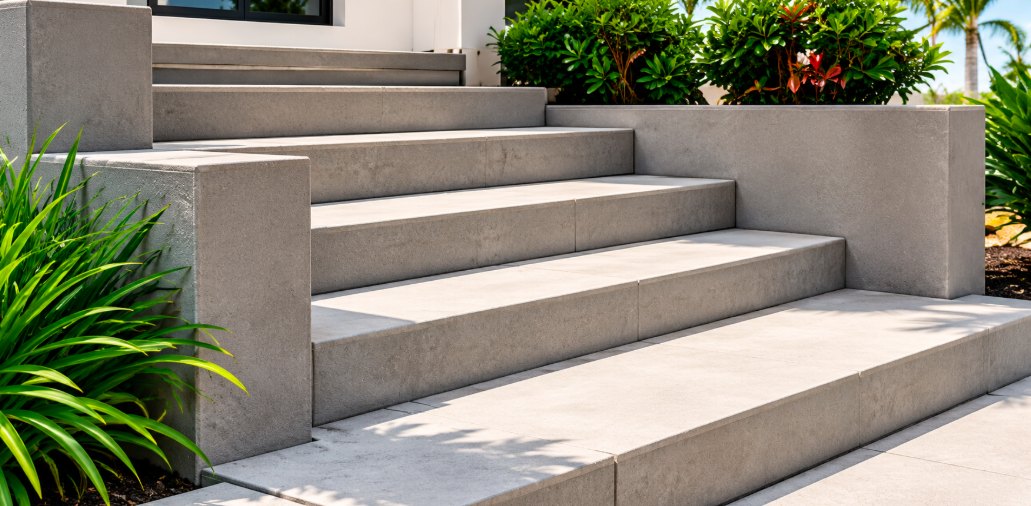

When concrete sections settle, the resulting dips and raised transitions can affect drainage, vehicle movement, pedestrian access, and the overall appearance of the property.
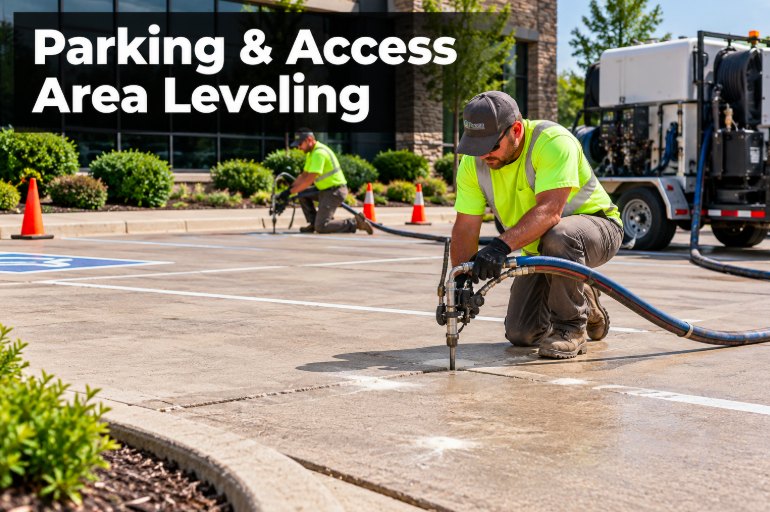
Parking and access area leveling provides a way to address many settlement problems while preserving existing concrete where practical.
Areas We Evaluate
Parking and access concrete can include many different surfaces, such as:
- Residential parking pads
- Apartment parking areas
- Small commercial parking lots
- Concrete loading areas
- Drive aisles
- Dumpster access pads
- Delivery zones
- Alley access
- Gated entrances
- Concrete aprons
- ADA access routes
- Walkways connected to parking
- Service entrances
Each area has different traffic and drainage requirements, so the leveling plan must reflect how the concrete is actually used.
What Causes Parking Concrete to Settle?
Parking surfaces are subjected to repeated loading that can expose weaknesses in underlying soil.
Settlement may develop because of:
- Poor base compaction
- Water erosion
- Drainage failures
- Underground utility trenches
- Heavy vehicle traffic
- Soil shrinkage
- Saturated soil
- Leaking irrigation
- Broken drainage or plumbing lines
- Edge erosion
When a void forms below a slab, traffic can place additional stress on unsupported concrete.
Uneven Concrete in Vehicle Areas
A settled parking slab can create uncomfortable vehicle transitions and low points where water collects.
In areas used by pedestrians, elevation differences may also become walking hazards.
Our evaluation considers both uses. A repair that improves vehicle movement should not create a new problem for pedestrians, doors, curbs, ramps, or nearby walkways.
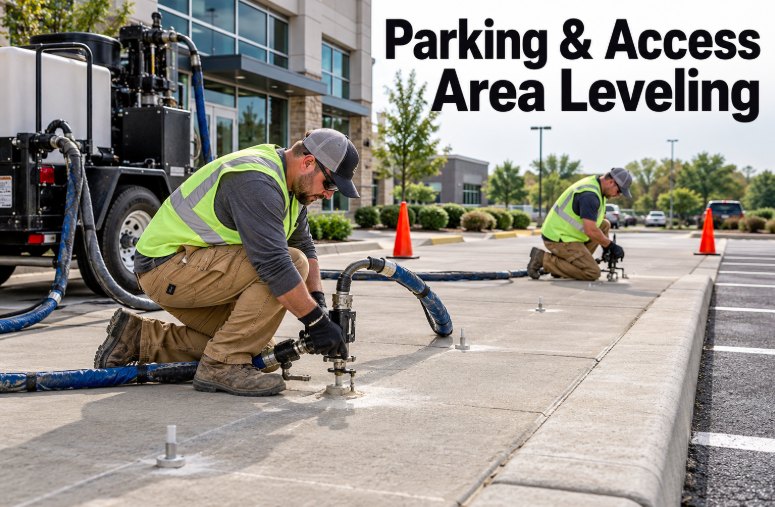
Commercial Concrete Leveling
Commercial sites often need repairs performed with minimal disruption.
Replacing a large concrete section can require demolition, hauling, forming, pouring, and curing before the area returns to normal use.
When existing slabs remain suitable for lifting, leveling may provide a less disruptive alternative.
The exact schedule depends on the repair method, concrete condition, and site requirements.
Parking Area Drainage
Drainage is especially important in parking and access areas.
Water needs a route toward drains, gutters, swales, or other approved discharge areas. Settlement can interrupt this path, leaving puddles in areas that originally drained correctly.
Before raising concrete, we review surrounding elevations to avoid moving water toward entrances, buildings, or neighboring low points.
The objective is to improve slab position while maintaining practical drainage.
Leveling Around Drainage Structures
Parking areas often contain catch basins, trench drains, utility covers, and other fixed structures.
Concrete surrounding these features can move independently, creating depressed areas or raised edges.
Leveling may improve the transition to these fixed components when sufficient room for correction exists.
In cases involving damaged drains or utilities, those systems may need separate repair.
Access Routes and Pedestrian Transitions
A parking lot is also a pedestrian environment.
People move from vehicles to doors, sidewalks, ramps, gates, and stairways. Uneven surfaces along these routes may become more noticeable than settlement in an isolated parking stall.
We consider how each repaired slab connects to neighboring walking surfaces.
Heavy Traffic Considerations
Concrete supporting frequent delivery trucks or commercial vehicles may require additional analysis.
The slab thickness, reinforcement, base condition, and traffic demands all influence whether leveling is appropriate.
If the concrete itself is no longer capable of supporting expected loads, replacement or reconstruction may be preferable.
Parking Concrete Replacement vs. Leveling
The decision depends primarily on slab condition.
Concrete with isolated settlement but good overall integrity may be suitable for leveling. Concrete that is severely broken, heavily deteriorated, or failing throughout a large area may benefit more from replacement.
Our goal is to recommend repair based on actual conditions rather than using one method for every property.
Reduce Disruption to Your Property
Uneven parking and access concrete can gradually become a larger maintenance concern if underlying voids or drainage issues continue.
An early evaluation can identify which slabs have moved and whether they can be corrected without extensive demolition.
Contact us to assess settled parking pads, concrete drive aisles, loading areas, access routes, and other uneven concrete surfaces.